
Eight days is Jordan without compromise. This is the most comprehensive classical itinerary in the Hajjat Tours collection — a journey that moves through the full breadth of the country, from its Roman cities in the north to its Red Sea coast in the south, taking in UNESCO World Heritage sites, biblical landscapes, medieval castles, ancient trade routes, desert wilderness, and natural wonders along the way. It is the itinerary for travelers who want to leave Jordan having truly understood it.
The route opens in Amman before heading north on day two to Jerash, Ajloun, and the remarkable Greco-Roman site of Umm Qais — a hilltop city with panoramic views stretching across the Sea of Galilee, the Golan Heights, and the Jordan Valley.
Day three introduces As-Salt, a UNESCO World Heritage town whose Harmony Trail tells the story of Jordan’s tradition of religious coexistence, before returning to Amman for a deeper city tour. Day four follows the King’s Highway south through Madaba and Mount Nebo to Petra. Day five is dedicated entirely to Petra — the rose-red Nabataean city that ranks among the greatest archaeological wonders on earth. The afternoon continues into Wadi Rum for a Bedouin desert night. Day six moves south to Aqaba on the Red Sea.
Day seven travels north to the Dead Sea. Day eight offers a final morning at the water before departure.Hajjat Tours has been operating in Jordan since 2003, and this eight-day program is the fullest expression of that experience — a route that leaves nothing significant out, connects every layer of Jordan’s story, and delivers it all with the seamless professionalism of a DMC that knows this country inside out.
Queen Alia International Airport (Google Map)
4 Hours Before Flight Time
Your journey with Hajjat Tours begins at Queen Alia International Airport (QAIA), where our representative will meet and assist you through arrivals and transfer you directly to your Amman hotel. The evening is yours — Amman is a city that rewards curiosity, with excellent restaurants, a vibrant arts scene, rooftop cafés, and a downtown neighbourhood that pulses with daily life. Overnight in Amman.
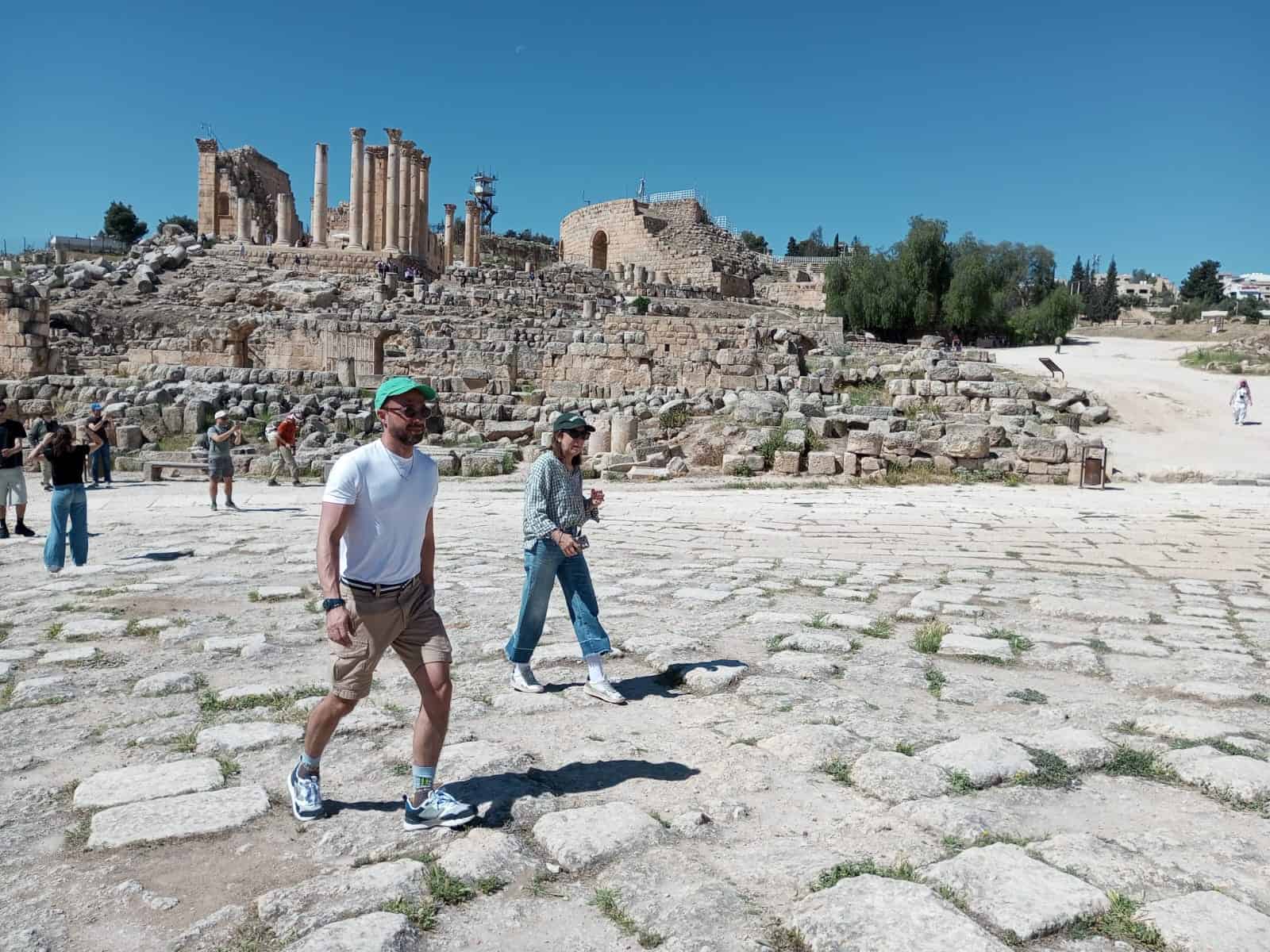
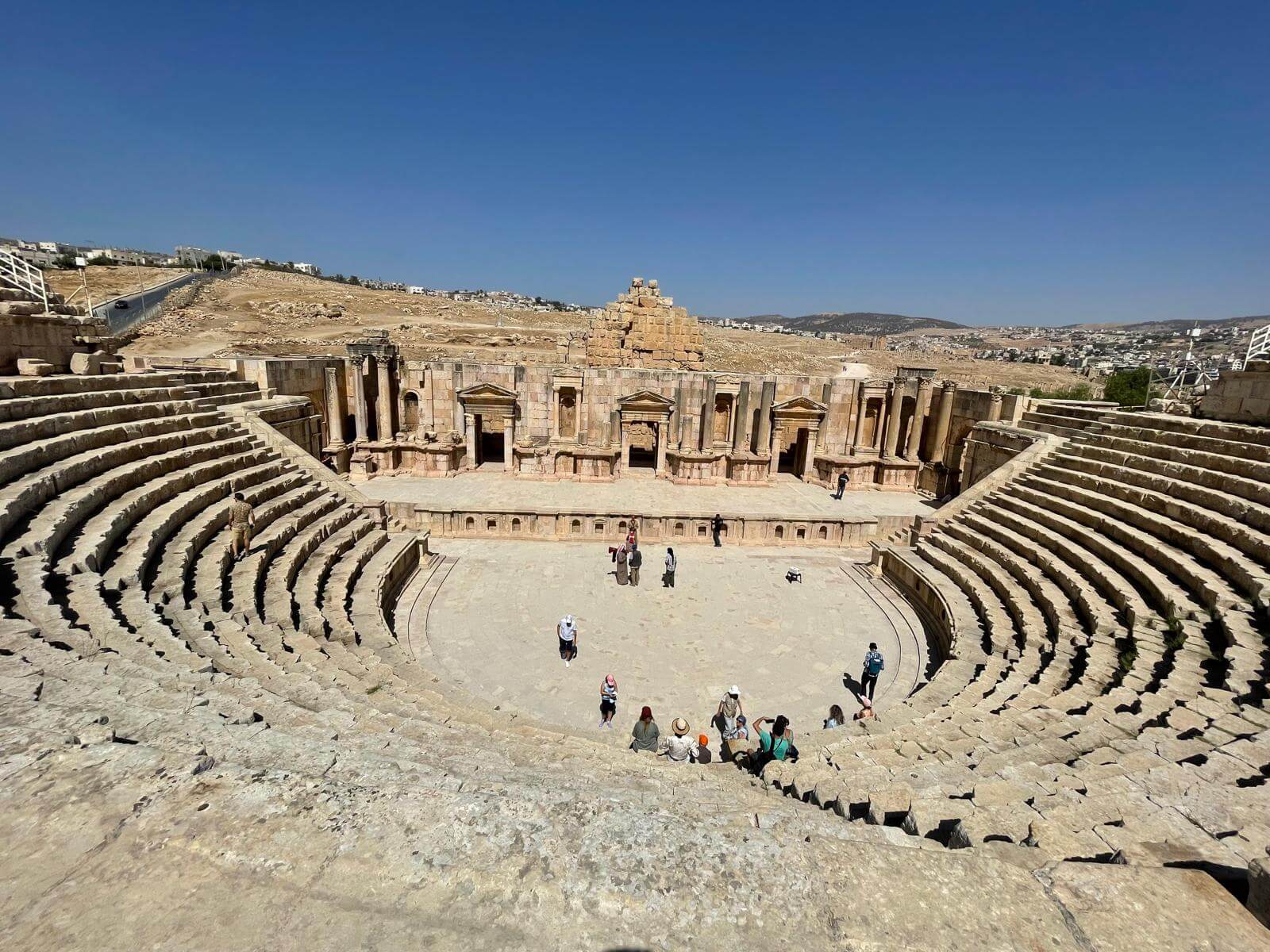
After breakfast, the day heads north into one of Jordan’s richest historical corridors. The first stop is Jerash — one of the most complete and best-preserved Roman provincial cities in the world. Walk through Hadrian’s Arch into the Oval Plaza, follow the colonnaded Cardo Maximus past the Temple of Artemis and the Nymphaeum, and explore two remarkably intact ancient theatres. Jerash rewards slow, attentive exploration — the carved details, the inscriptions, the scale of what was built here nearly 2,000 years ago become more extraordinary the longer you look.
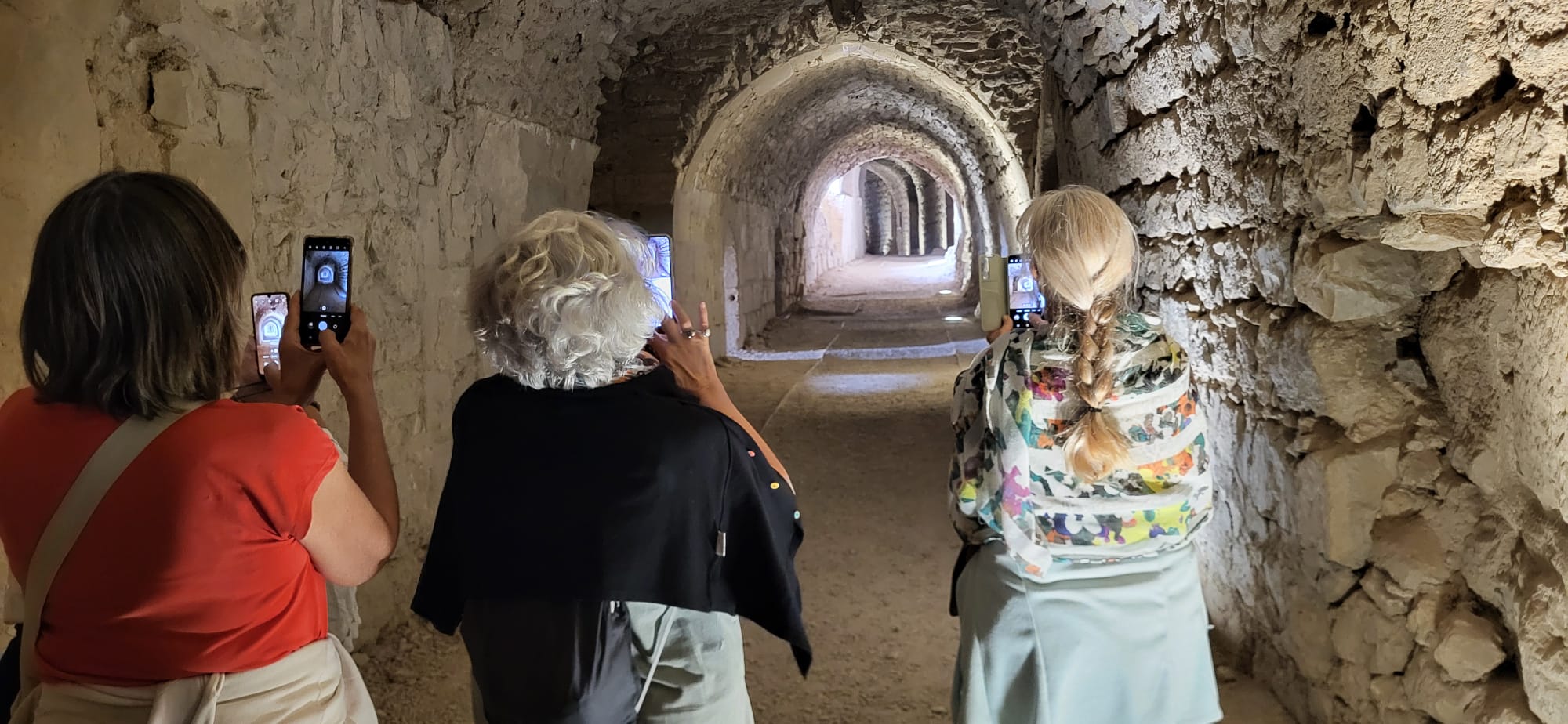
From Jerash, continue to Ajloun — the 12th-century castle of Qal’at Ar-Rabad, built by a general of Saladin on a forested hilltop commanding views over the Jordan Valley and three surrounding wadis. One of the finest examples of early Islamic military architecture in the Levant, Ajloun tells the story of the Crusader period from the perspective of the Arab world in a way few sites can.
The day concludes at Umm Qais — the ancient Greco-Roman city of Gadara, sitting on a hilltop at the far northwest corner of Jordan. The basalt ruins here are striking in themselves, but it is the view that makes Umm Qais genuinely unforgettable: on a clear day, the Sea of Galilee shimmers to the northeast, the Golan Heights rise to the north, and the Jordan Valley stretches south below. It is one of the great panoramic viewpoints in the entire region, and one that most visitors to Jordan never reach. Return to Amman for overnight.
After breakfast, travel west to As-Salt — a UNESCO World Heritage Site and one of Jordan’s most underappreciated towns. The Harmony Trail is a walking route through the old city that tells the story of As-Salt’s remarkable tradition of coexistence between Muslim and Christian communities, visible in the town’s Ottoman-era architecture, its shared public spaces, and the way its streets have been lived in and cared for across generations.
It is a quieter, more reflective kind of history than the grand monuments of Jerash or Petra, and all the more affecting for it.
Return to Amman for a thorough city tour — the Citadel (Jabal al-Qal’a) with its Temple of Hercules, Byzantine church, and Umayyad Palace; the Roman Theatre below; and the downtown area of Al-Balad, where the city’s daily life unfolds across markets, bakeries, traditional coffee shops, and some of the best street food in Jordan. Amman deserves more than a passing glance, and this itinerary gives it the attention it warrants. Overnight in Amman.
After breakfast, the road heads south along the King’s Highway — an ancient route that has connected civilisations across this landscape since the Bronze Age. The drive through highland Jordan is one of the country’s great pleasures, passing through agricultural plateaus, traditional villages, and deep valley views before descending toward the south.
The first stop is Madaba, the City of Mosaics. At the Church of Saint George, the 6th-century Byzantine mosaic map of the Holy Land is one of the most remarkable objects in Jordan — a floor-level cartographic masterpiece rendered in coloured stone, with Jerusalem at its centre and the geography of the ancient world spread out around it in extraordinary detail. Madaba rewards a short wander beyond the church as well, with additional mosaic sites, workshops, and an atmospheric town centre.
From Madaba, continue to Mount Nebo — the hilltop where Moses is believed to have looked out over the Promised Land before his death. The views from the summit are among the most emotionally resonant in Jordan: the Jordan Valley below, the Dead Sea to the south, Jericho across the river, and on the clearest days, the distant silhouette of Jerusalem. The Memorial Church of Moses contains some of the finest early Christian mosaics in the country, and the serpentine bronze cross at the viewpoint has become one of Jordan’s most recognisable landmarks.
The road continues south to Petra for overnight — arriving in Wadi Musa with the evening free to rest, explore local restaurants, and prepare for a full day inside one of the world’s great ancient cities.
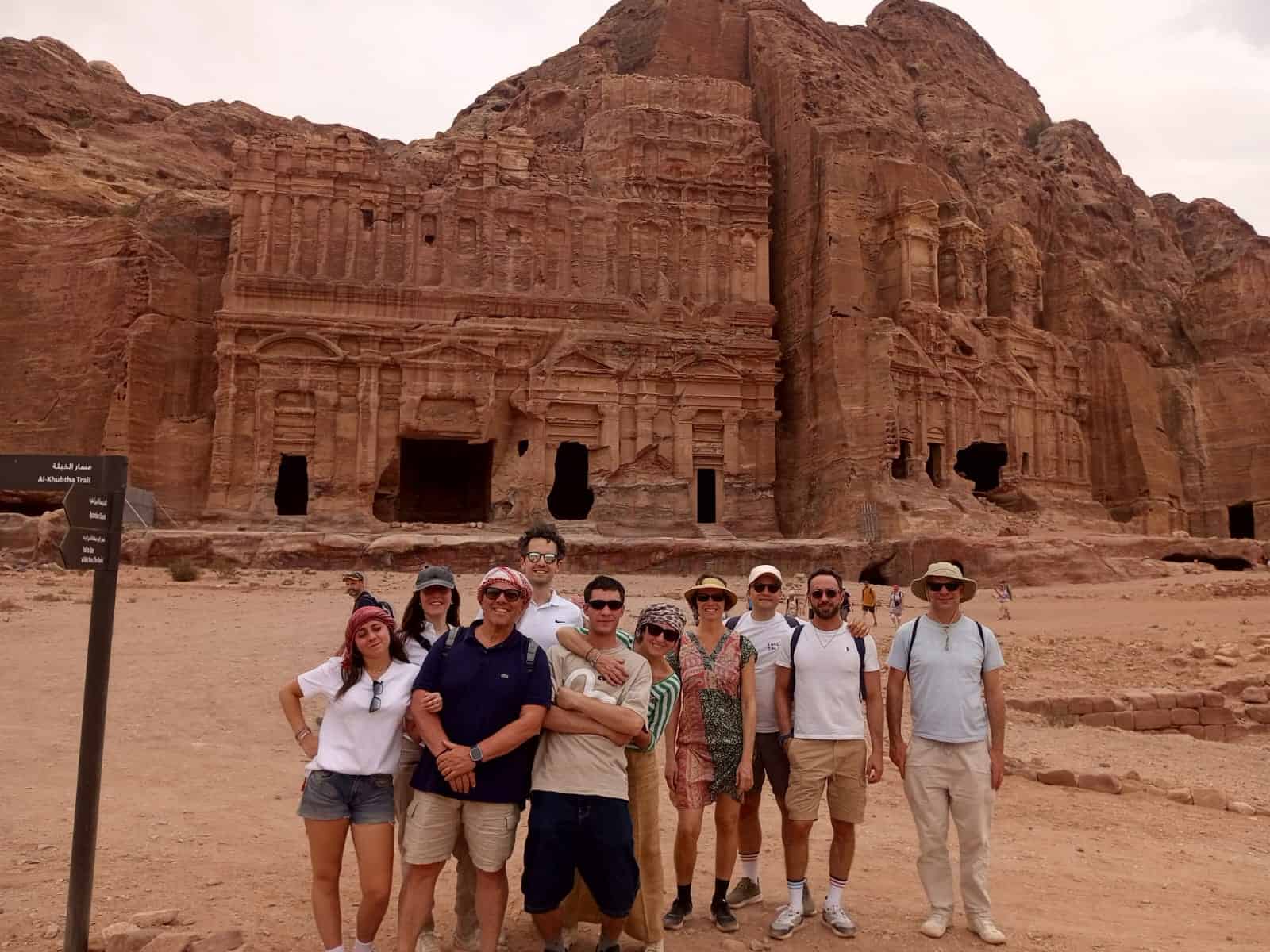
Today is dedicated to Petra — and a full day is what it deserves. Enter the ancient Nabataean city through the Siq, the narrow winding sandstone canyon that builds in anticipation for over a kilometre before delivering one of the most breathtaking reveals in travel: the Treasury (Al-Khazneh), its 40-metre rose-red carved facade emerging from the rock with a precision and grandeur that continues to astonish more than two thousand years after it was made.
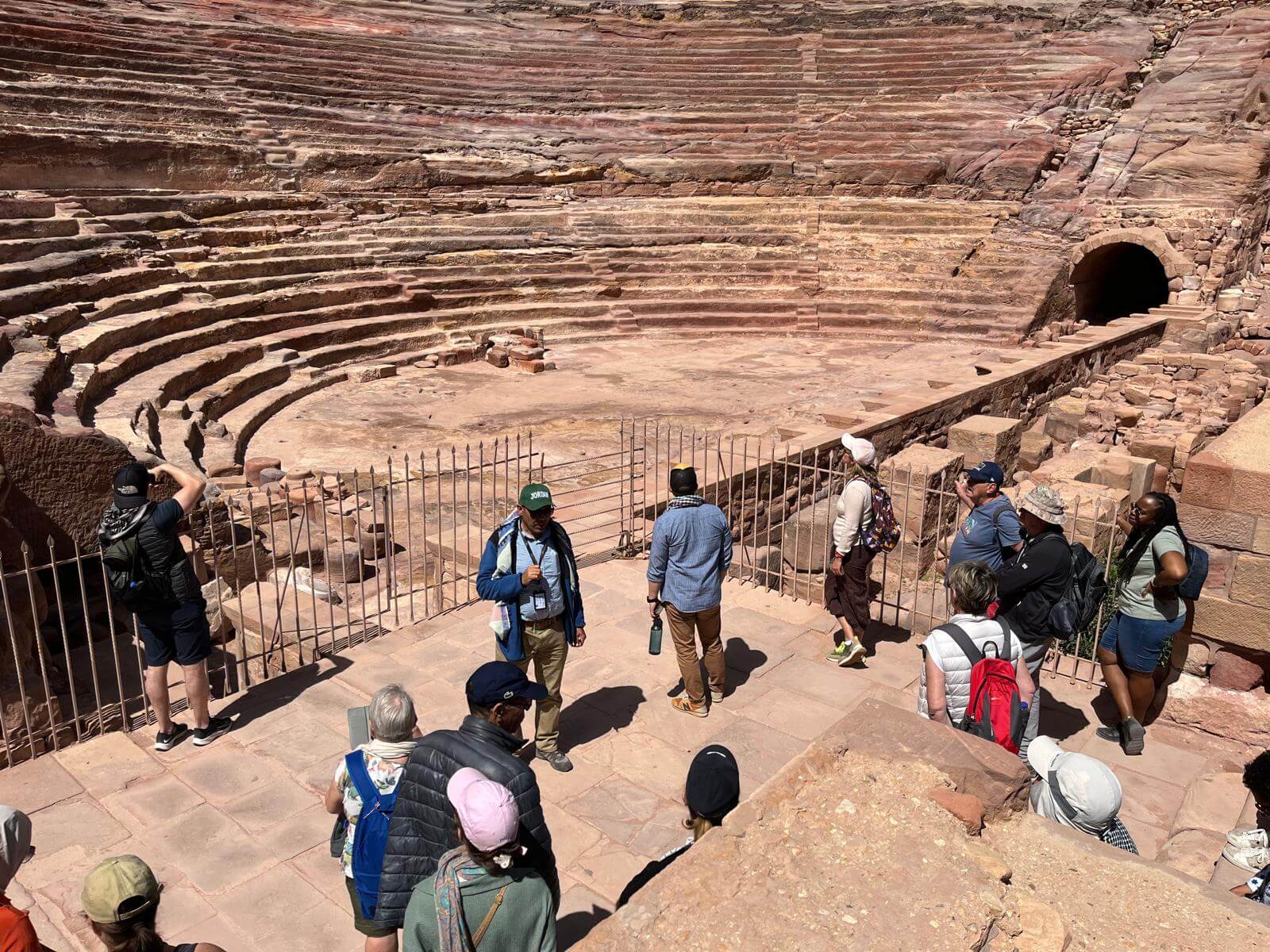
Beyond the Treasury, the city unfolds across a wide valley: the Street of Facades, the Royal Tombs carved high into the eastern cliff face, the colonnaded street, the Nabataean theatre, the Great Temple complex, and the long climb to the Monastery (Ad-Deir) — Petra’s largest monument, reached by 800 carved rock steps and offering panoramic views across the desert beyond. A UNESCO World Heritage Site and one of the New Seven Wonders of the World, a full day in Petra still feels like not quite enough.
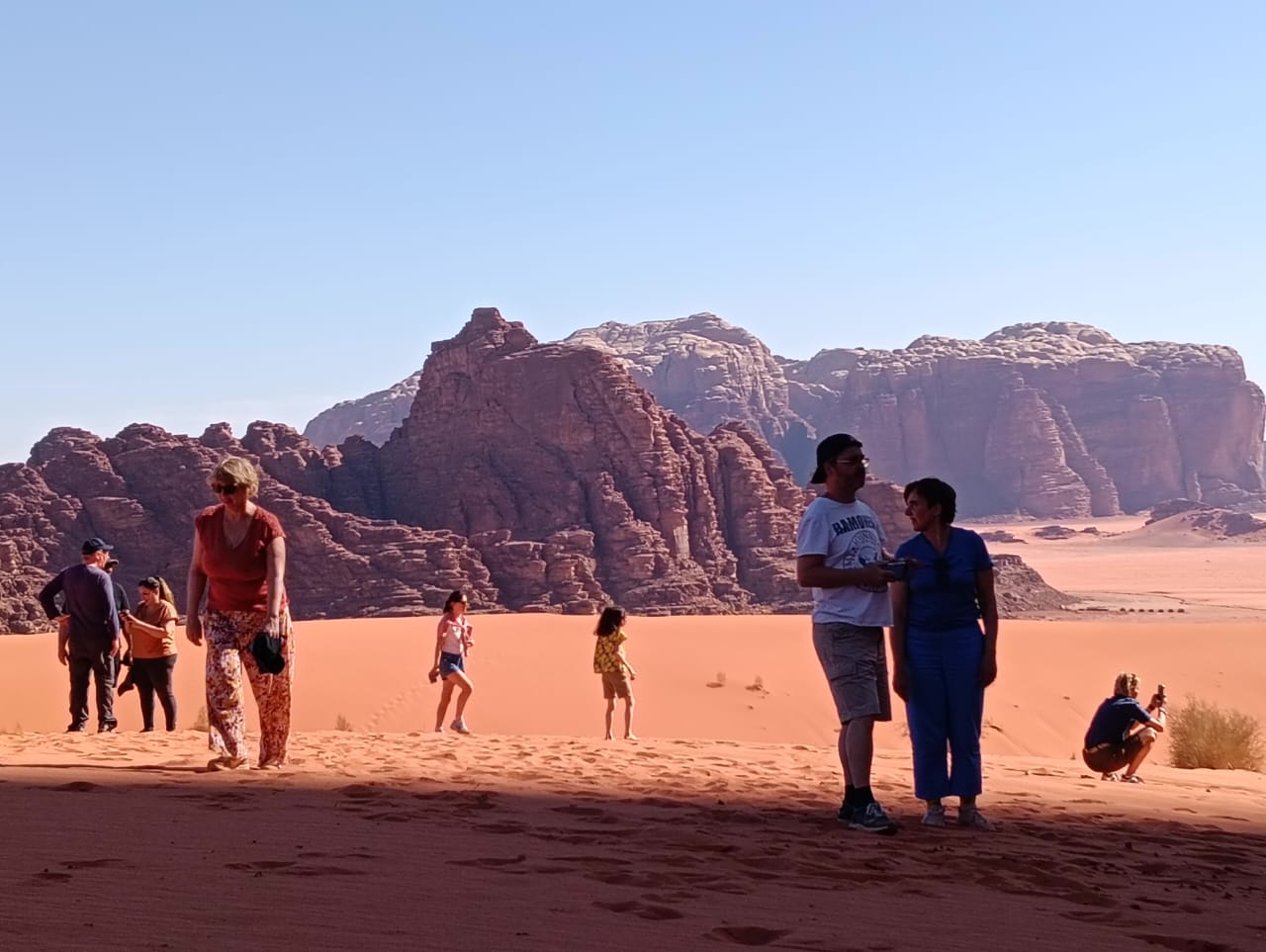
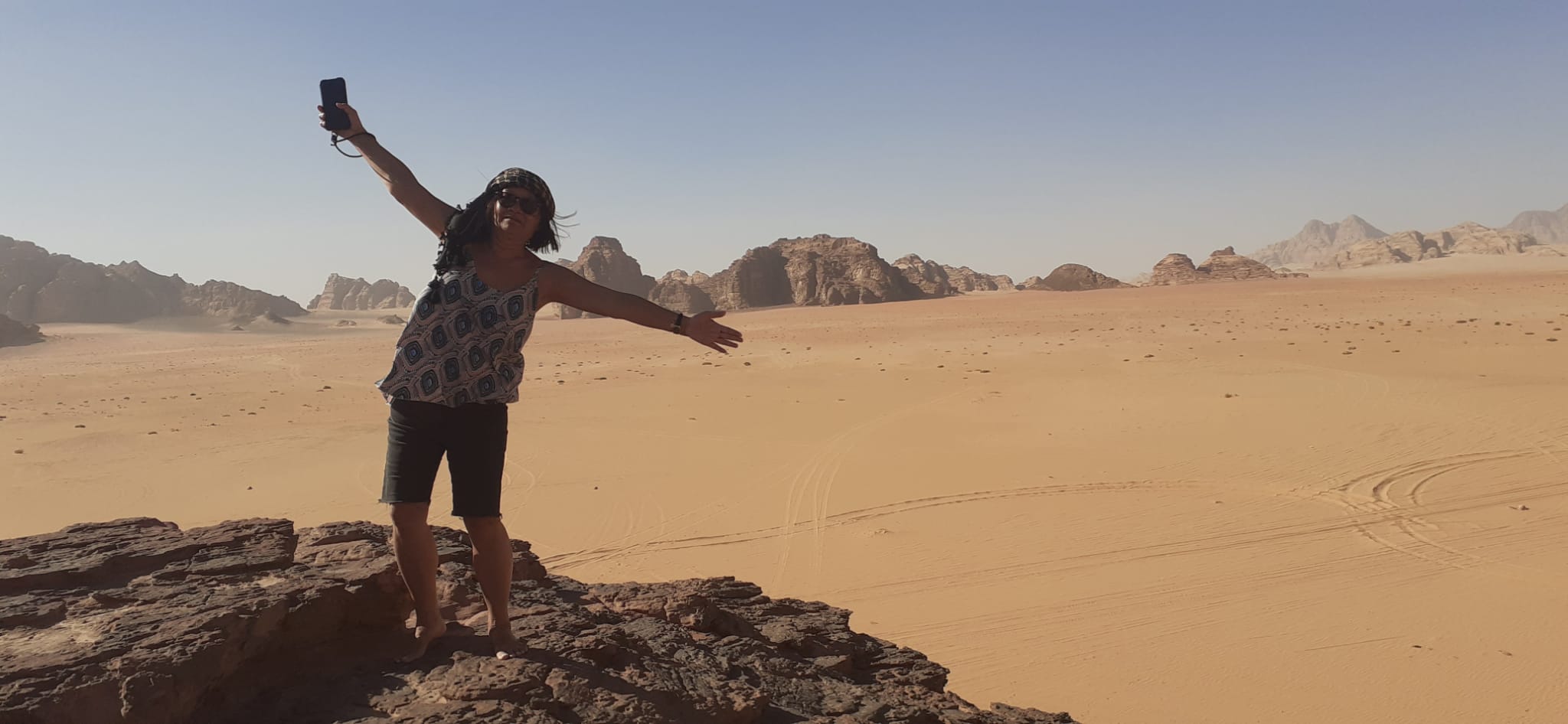
In the late afternoon, the route continues south to Wadi Rum — Jordan’s great protected desert, a UNESCO World Heritage landscape of vast red sand plains, towering sandstone and granite massifs, narrow slot canyons, and ancient rock inscriptions left by the Thamudic and Nabataean peoples. Arriving as the desert light turns the sand a deep, burning amber, you’ll settle into your Bedouin camp for a traditional dinner beneath a sky so dense with stars it becomes its own destination. Overnight in Wadi Rum.
The morning belongs to the desert. Wadi Rum — the Valley of the Moon — is at its most extraordinary in the early hours, when the light is low, the shadows long, and the silence complete. The scale of the landscape — the vast open plains, the sheer cliff faces, the sense of being genuinely far from anywhere — is one of the most powerful experiences this itinerary offers. Take the time to sit with it before departing.
From Wadi Rum, the road heads south to Aqaba — Jordan’s only coastal city, sitting at the northern tip of the Red Sea between Saudi Arabia to the east and Israel and Egypt across the water. Aqaba is warm, unhurried, and genuinely beautiful. The afternoon is free: walk the corniche as the sun drops over the water, explore the old Aqaba Fort and the downtown markets, take a glass-bottom boat ride over the coral reefs, or simply find a spot by the sea and let the Red Sea do its work. The water here is remarkably clear, the reefs are accessible from the shore, and the city has a relaxed energy that provides a natural counterpoint to the intensity of Petra and the drama of Wadi Rum. Overnight in Aqaba.
After breakfast, the road heads north from Aqaba through the Wadi Araba — the long rift valley that connects the Red Sea to the Dead Sea, rising through desert terrain and dramatic geological scenery before the Dead Sea comes into view, its flat, silver-blue surface sitting impossibly still at the bottom of the world.
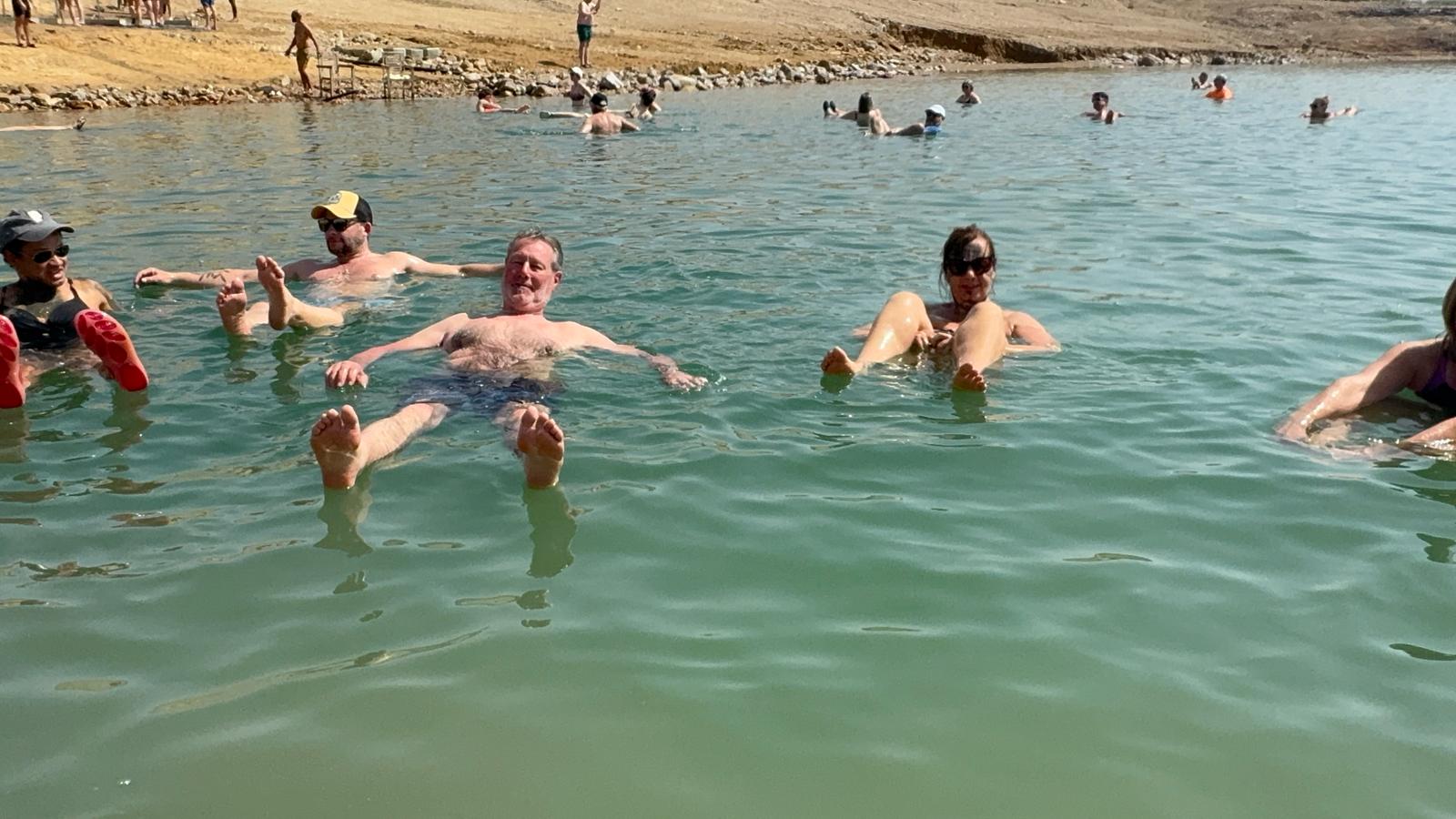
At 430 metres below sea level, the Dead Sea is the lowest point on Earth and one of its most extraordinary natural phenomena. Float effortlessly in waters so dense with salt and minerals that remaining upright requires genuine effort. Apply the famous shoreline mud — rich in magnesium, calcium, and potassium — and spend the afternoon at your resort as the hills of the West Bank catch the last light across the water. Overnight at the Dead Sea.
A final, unhurried morning by the water. One last float, a long breakfast, a walk along the shoreline. Hajjat Tours will arrange your transfer north to Queen Alia International Airport — and you’ll leave Jordan having seen the whole of it, properly and without hurry, in the company of people who know it better than anyone.
|
City |
03 Stars |
04 Stars |
05 Stars |
|
Amman |
|||
|
Dead Sea |
|||
|
Petra |
|||
|
Wadi Rum |
Luxury Rum Magic Camp |
||
|
Aqaba |
Cedar Hotel |
Eight days gives this itinerary the room to cover Jordan fully, without compromise and without rush. Every destination receives the time it deserves, and the routing is designed to flow naturally across the country’s geography. Hajjat Tours manages every logistical detail — from airport transfers to hotel check-ins to the sequencing of each day — so the experience remains seamless from first arrival to final departure.