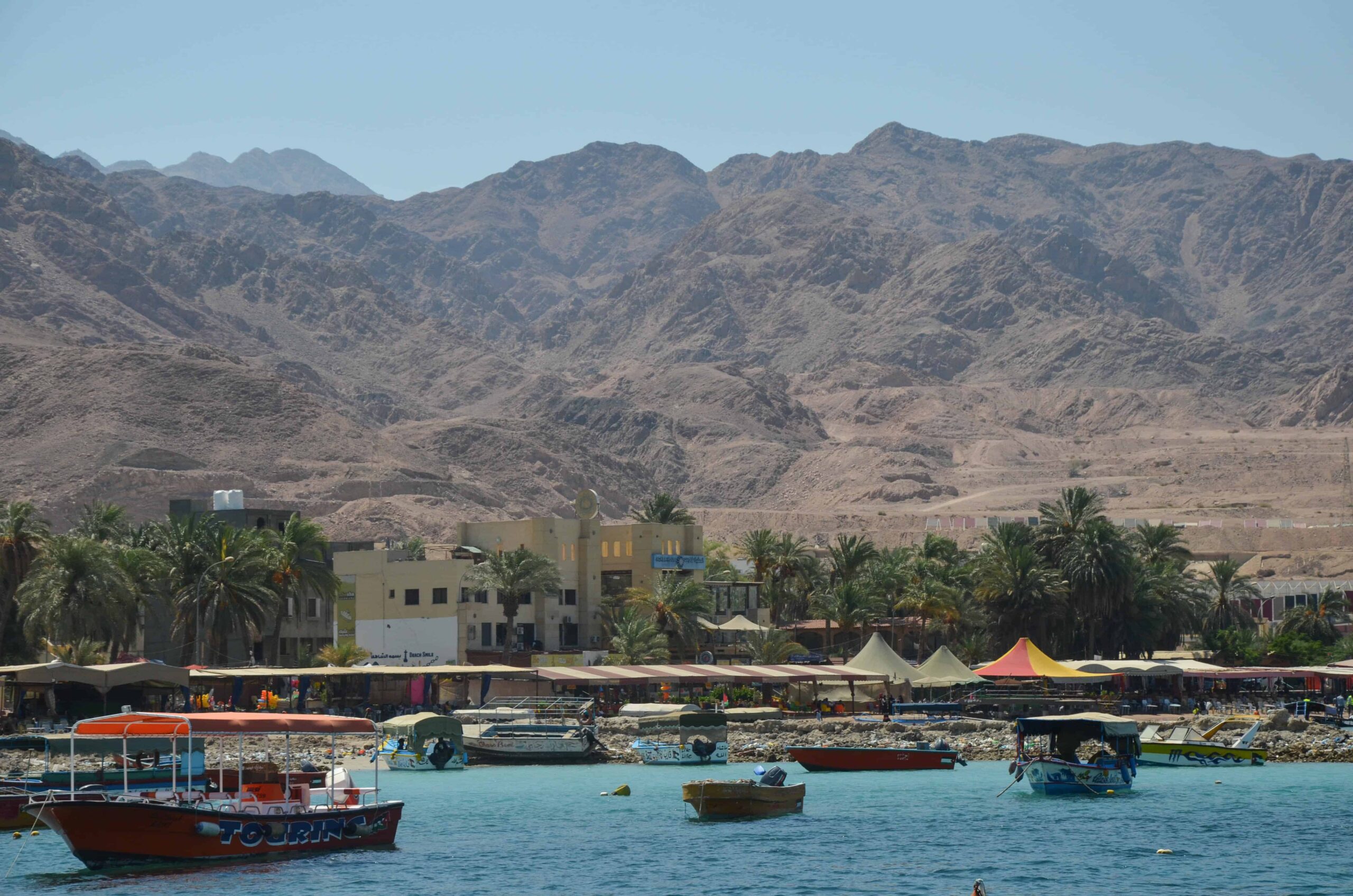

Not every Jordan journey has to start in Amman. This four-day itinerary with Hajjat Tours opens on the Red Sea and works its way north — a reverse route that begins with the warmth of Aqaba, moves through the desert wilderness of Wadi Rum, traces the biblical landscapes of Madaba and Mount Nebo, floats at the Dead Sea, and squeezes one of the world’s great ancient cities into a single powerful day. It is the ideal itinerary for travelers flying into Aqaba, cruise passengers docking at the port, or anyone who wants to experience Jordan from a different angle.
Day one arrives at King Hussein International Airport in Aqaba and heads straight into Wadi Rum — no wasted time, no unnecessary stops. Dinner and an overnight at a Bedouin desert camp set the tone immediately. Day two moves north through Madaba and Mount Nebo before arriving at the Dead Sea. Day three takes a full run at Petra — the rose-red Nabataean city that needs no introduction — before returning to Aqaba for a final overnight. Day four offers a quiet morning on the Red Sea before departure.
Hajjat Tours has been operating in Jordan since 2003, and this Aqaba-arrival itinerary reflects the same depth of local knowledge and seamless service that runs through every program in the collection — meet and assist on arrival, English-speaking drivers, Wi-Fi vehicles, all entrance fees covered, and flexible hotel options from 3 to 5 stars.
Queen Alia International Airport (Google Map)
4 Hours Before Flight Time
Your Jordan journey begins at King Hussein International Airport in Aqaba, where Hajjat Tours’ representative will meet and assist you through arrivals before transferring you directly south to Wadi Rum. The transition from airport to desert is one of the most dramatic openings any itinerary can offer — within an hour of landing, you are in one of the most extraordinary landscapes on earth.
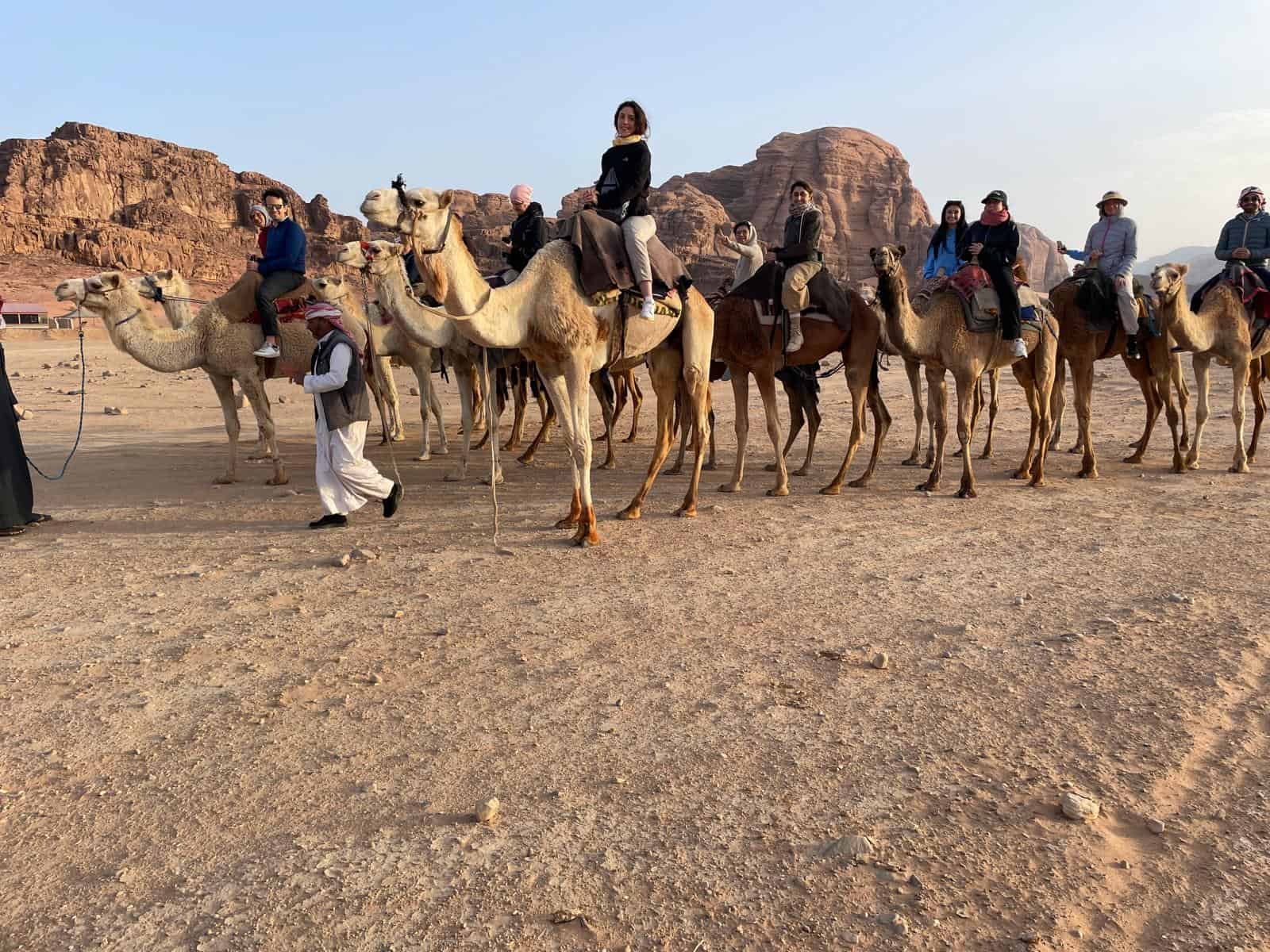
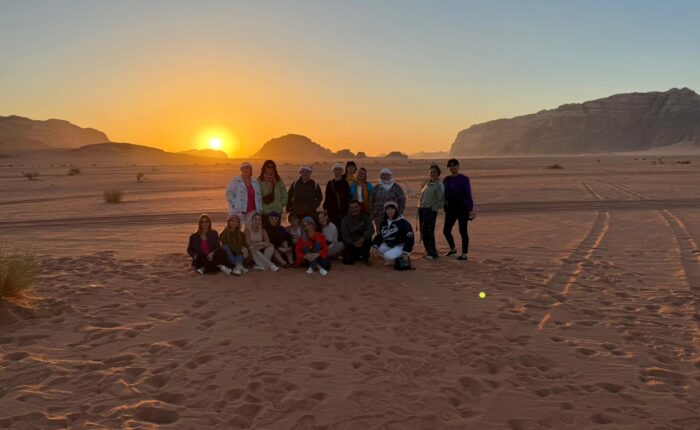
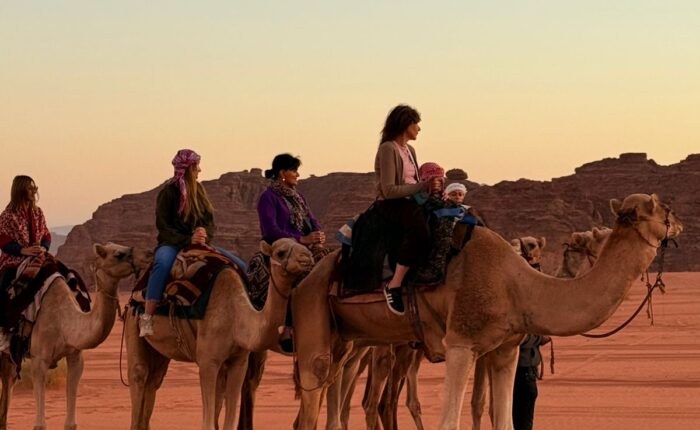
Wadi Rum is a UNESCO World Heritage protected desert of vast red sand plains, towering sandstone and granite massifs, narrow slot canyons, and ancient rock inscriptions that stretch back thousands of years. Arriving in the late afternoon as the desert light softens and the sand turns amber, you’ll settle into your Bedouin camp for a traditional dinner beneath a sky so clear and so full of stars it becomes a destination in itself. Overnight in Wadi Rum.
Wake up in the desert — one of the quieter, more memorable mornings this itinerary offers. Take the time to absorb Wadi Rum before the road heads north through the dramatic Wadi Araba rift valley toward the highland towns of central Jordan.
The first stop is Madaba — the City of Mosaics. At the Church of Saint George, the famous 6th-century Byzantine mosaic map of the Holy Land spreads across the floor in extraordinary detail: Jerusalem at its centre, the Jordan River, the Dead Sea, the Nile Delta, and dozens of ancient towns rendered in coloured stone. It is one of the oldest cartographic representations of the region ever discovered and one of Jordan’s most visited and most rewarding sites.
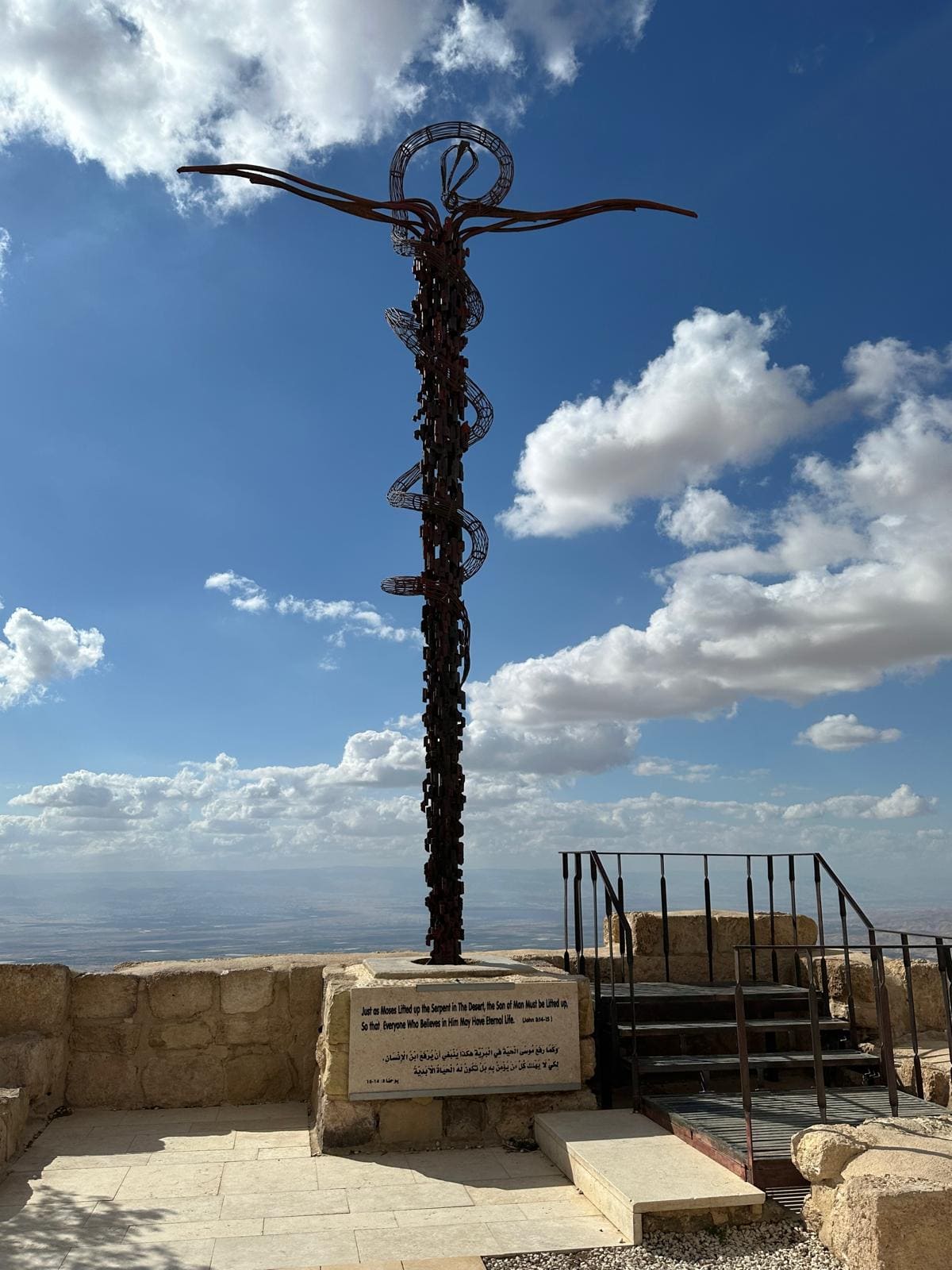
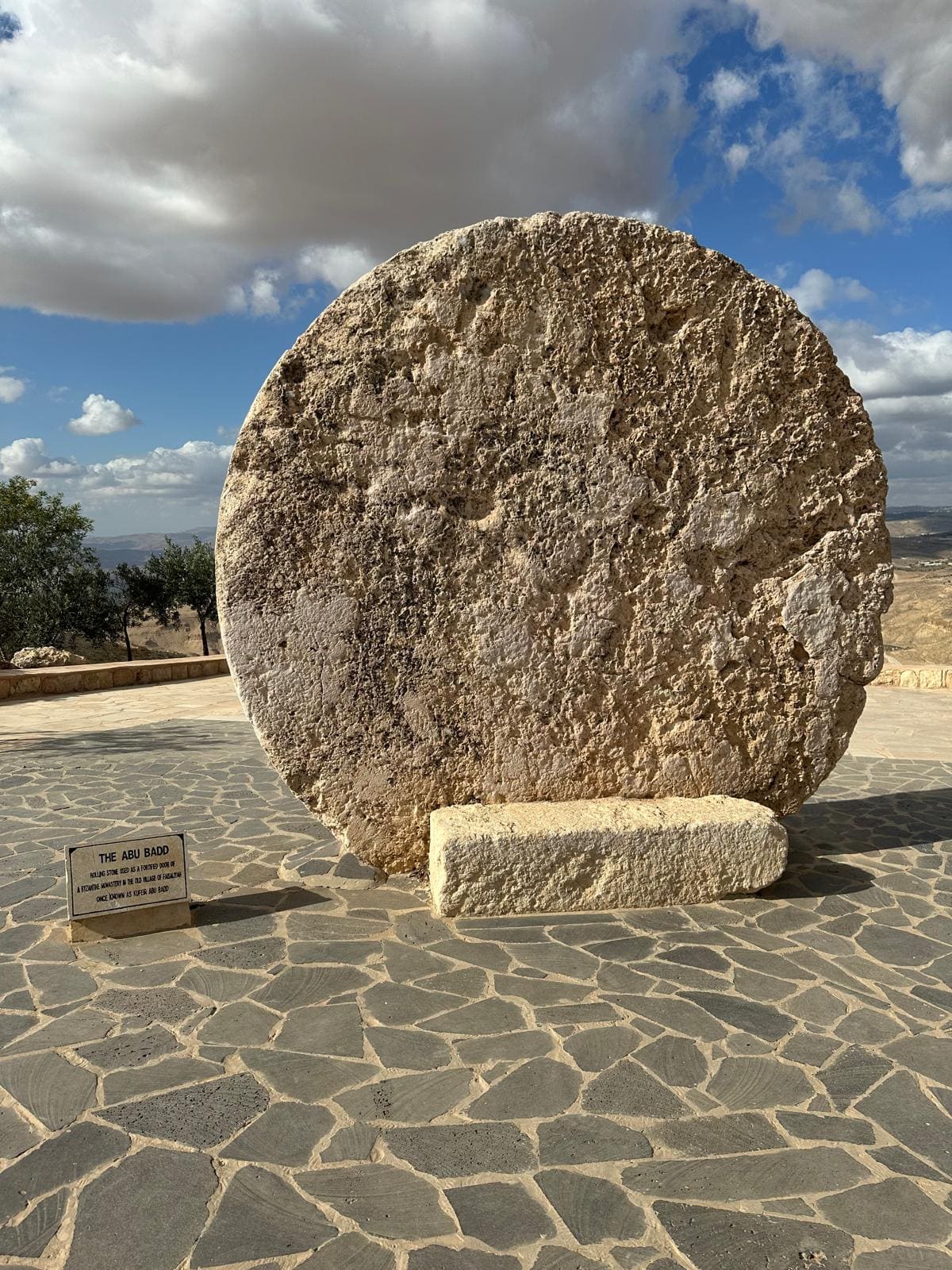
From Madaba, continue to Mount Nebo — the hilltop from which Moses is believed to have seen the Promised Land before his death. The views from the summit are exceptional: the Jordan Valley below, the Dead Sea glittering to the south, Jericho across the river, and on the clearest days, the distant silhouette of Jerusalem. The Memorial Church of Moses here contains some of the finest early Christian mosaics in Jordan.
The afternoon brings the Dead Sea — the lowest point on Earth at 430 metres below sea level. Float effortlessly in the hypersaline waters, apply the famous mineral-rich mud on the shoreline, and unwind at your resort as the hills of the West Bank catch the late afternoon light across the water. Overnight at the Dead Sea.
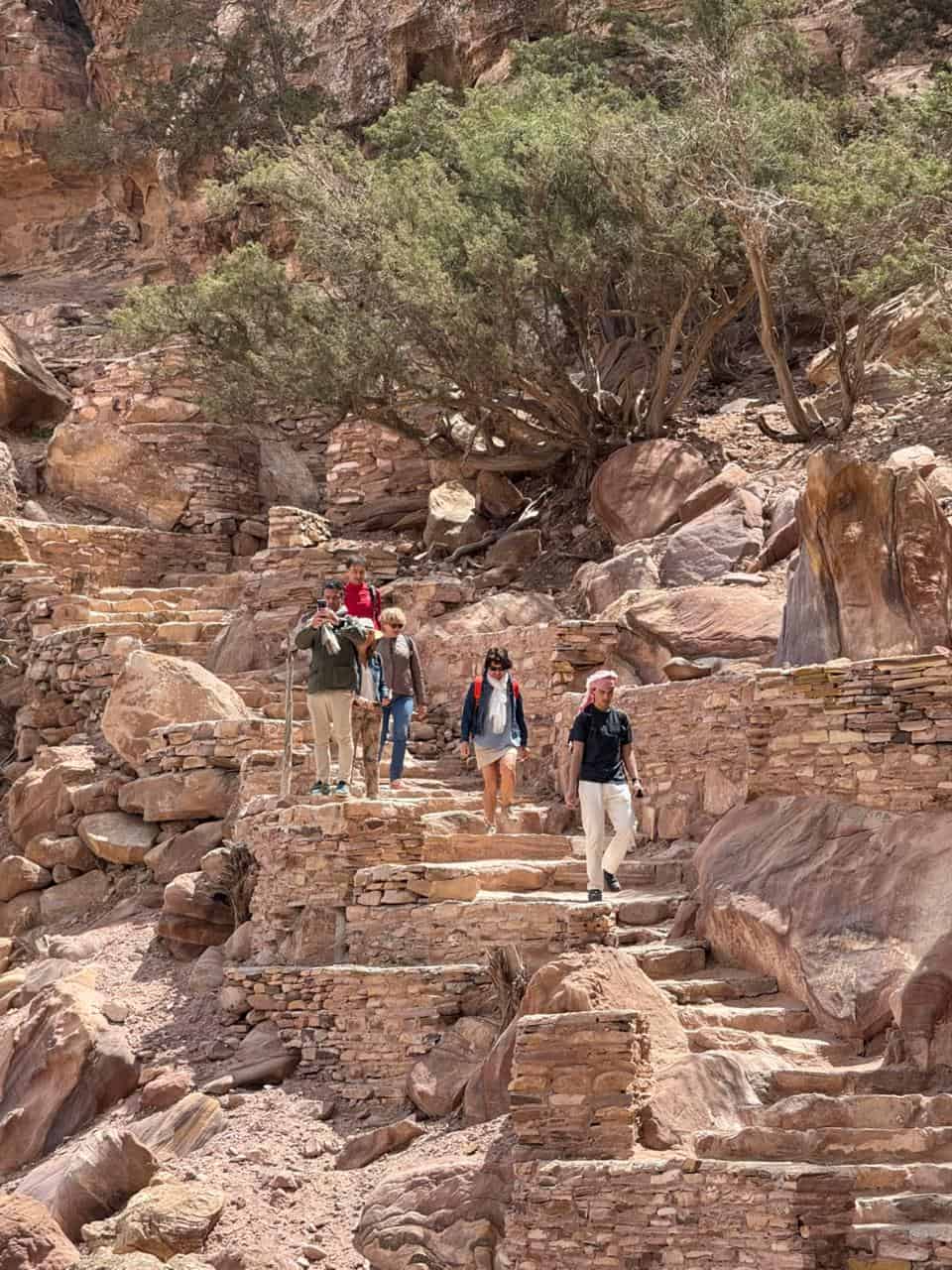
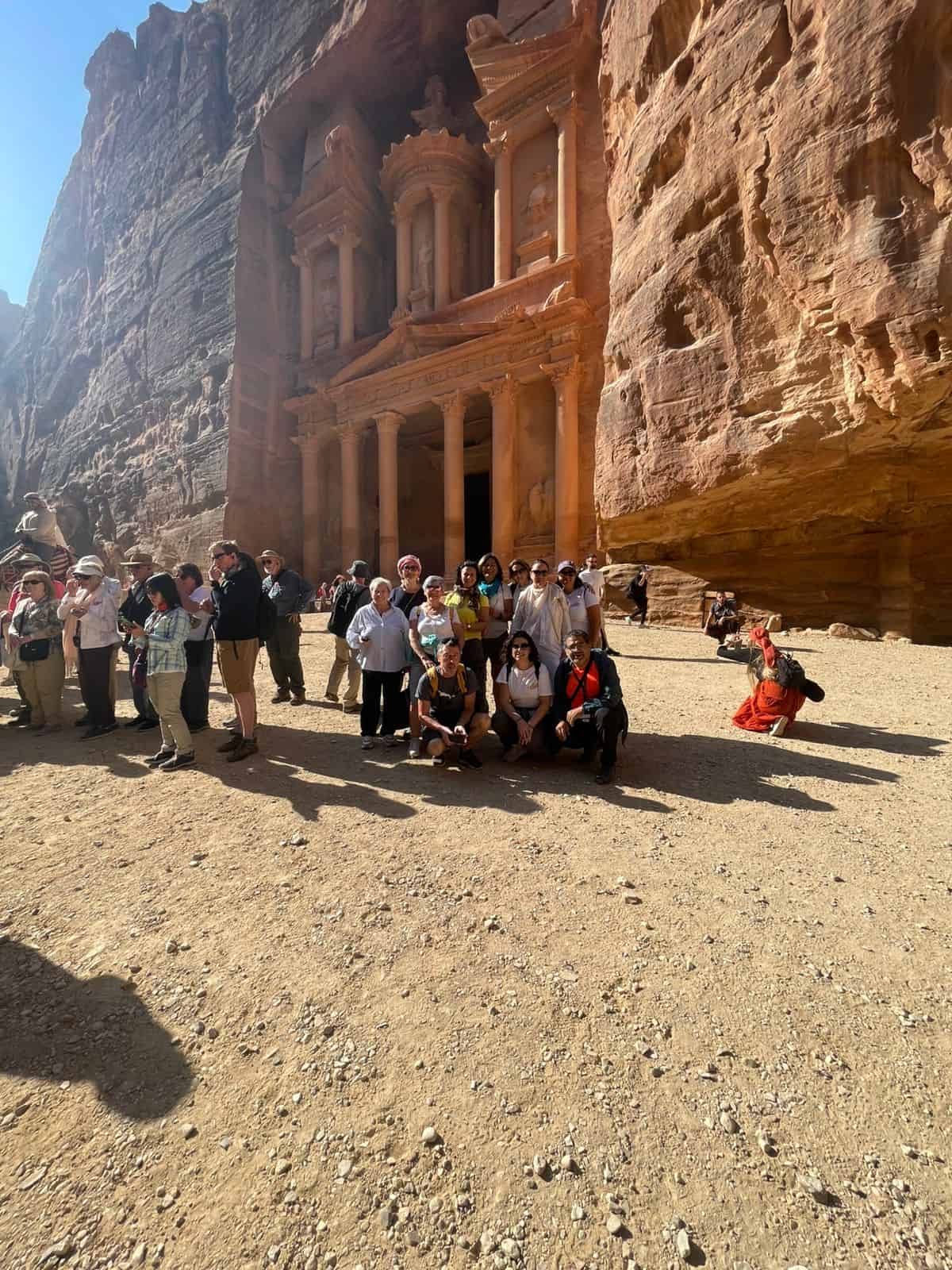
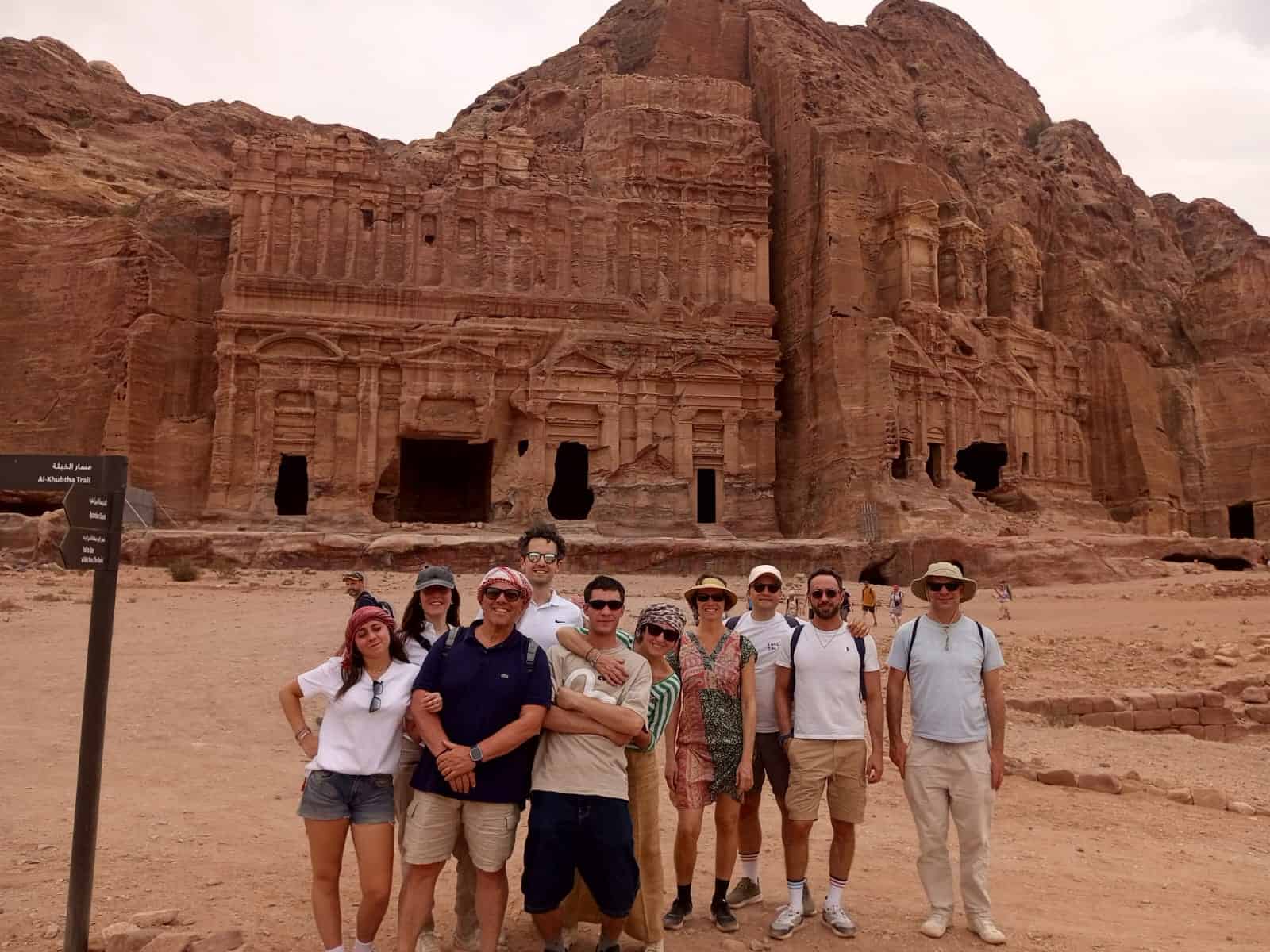
After breakfast, the day heads south to Petra — one of the New Seven Wonders of the World and a UNESCO World Heritage Site. Enter through the Siq, the narrow winding sandstone canyon that builds in anticipation for over a kilometre before delivering the extraordinary reveal of the Treasury (Al-Khazneh), its 40-metre rose-red carved facade emerging from the rock with a grandeur that stops you in your tracks. Beyond the Treasury, the ancient Nabataean city unfolds — tombs, temples, a colonnaded street, rock-carved monuments, and a sense of scale that makes the civilisation that built this place feel genuinely astonishing.
In the late afternoon, the road continues south back to Aqaba on the Red Sea — Jordan’s coastal city, where the pace slows and the water is warm. Overnight in Aqaba.
A final morning at leisure in Aqaba — walk the corniche, have a long breakfast by the water, or simply enjoy the Red Sea air before your transfer to King Hussein International Airport for departure. Hajjat Tours will handle everything, as always.
|
City |
03 Stars |
04 Stars |
05 Stars |
|
Aqaba |
Cedar Hotel |
||
|
Dead Sea |
|||
|
Wadi Rum |
Luxury Rum Magic Camp |
This itinerary runs in reverse to the standard classical route — south to north and back again — which gives it a distinctive rhythm and makes it the natural choice for Aqaba arrivals. Hajjat Tours manages every transition seamlessly, so the experience flows without effort.